



As a response to the climate emergency and social crises, the United Nations established a set of Sustainable Development Goals, to be achieved by 2030. These are organised in 17 concrete objectives to tackle global issues in order to reach a sustainable and peaceful future for everyone, everywhere. For family offices exploring ways to make a meaningful impact, investing in ocean conservation presents an interesting opportunity to achieve the 14th SDG.
Oceans cover three-quarters of the Earth’s surface and contain 97% of the earth’s water. They are essential providers of natural resources including food, medicines and biofuels. They also play a key role in regulating the climate, and rainwater, and providing oxygen. Achieving a sustainable future will inevitably come through careful management of this essential global resource. At the moment, there are 3 main issues with life below water: pollution, global warming, and overfishing.
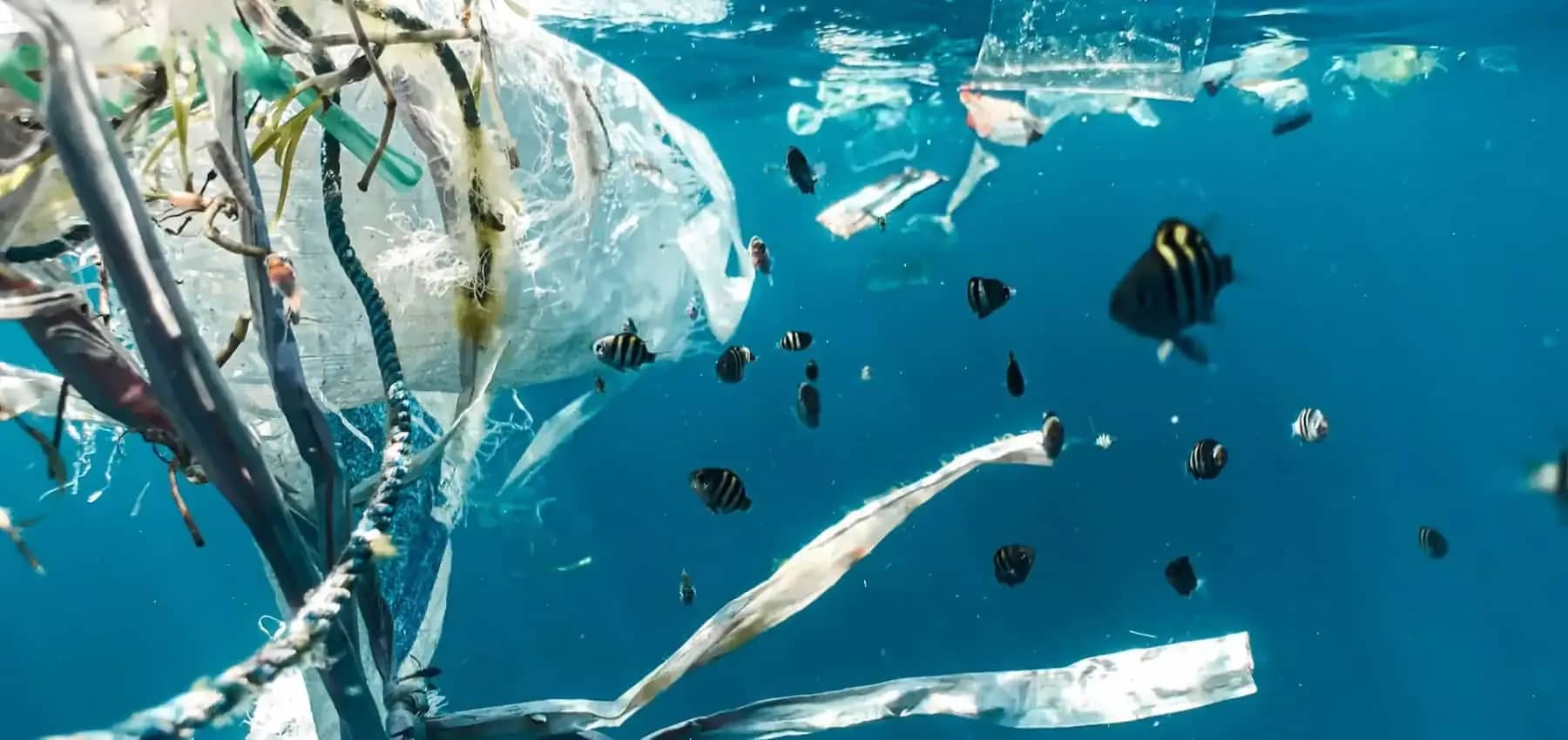
There are many types of pollution including plastic, hydrocarbons, and organic compounds, which all damage marine ecosystems. Plastic pollution is a major issue for ocean preservation, as plastics take hundreds of years to decompose and the entanglement or ingestion of debris can kill organisms or make it impossible for them to reproduce. Sewage and industrial or agricultural run-off of chemicals also endanger marine life. Noise pollution from boats can trouble marine wildlife’s migration patterns and damage their internal organs.
The world’s oceans drive global systems and make earth habitable for humankind through their role in regulating the temperature and the fact they absorb about 30% of human-induced carbon dioxide releases, mitigating the impacts of climate change. However, excessive absorption of CO2 lowers the water’s pH and results in acidification. This threatens species like clams, oysters and corals to form their skeletons. Furthermore, global warming is causing rising sea levels, which can lead to floods and more frequent and stronger storms since warmer water vaporizes faster.
Improper management of marine resources can result in overfishing, meaning there is a rapid depletion of many fish species which disrupts the entire food chain. Additionally, modern fishing techniques allow for enormous catches which are not specific to certain species and therefore capture non-target species, known as by-catch, which are later on discarded back to the sea, dead. Poor ocean management affects marine ecosystems and also has a huge economic impact, the UN Environment Programme estimates it causes a loss of $200 billion a year. Indeed, without a sustainable fishing rate, many fishery-related jobs are at risk.
Key figures
Over 3 billion people depend on marine and coastal biodiversity for their livelihoods. Indeed, the oceans are the world’s largest source of protein, and also provide jobs in sectors such as tourism, recreation, maritime transport, and of course fisheries. Yet, the rapid depletion of many fish species, in part due to subsidies granted with mismanaged incentives, is preventing efforts to save and restore life below water, causing ocean fisheries to generate $50 billion less per year than they could.
Marine fisheries directly or indirectly employ over 200 million people and the market value of marine and coastal resources and industries is estimated to be $3 trillion annually, representing 5% of the global GDP.
Yet today, 30% of the world’s fish stocks are overexploited, meaning they are below the level at which they can produce sustainable yields. Additionally, 40% of the ocean is heavily affected by pollution, depleted fisheries, loss of coastal habitats and other human activities.
As for coral reefs, essential for temperature regulation and home to thousands of species, about 20% of them have been effectively destroyed with no prospects for recovery and a further 24% are under imminent risk of collapse due to human-induced pressures.
Marine protected areas allow an increase in fish catches and therefore income, which contributes to poverty reduction and improves health. Preserving the oceans and their biodiversity is essential for the planet’s health and for better human development.
Investing in ocean conservation
Nowadays, it’s possible to demand more than a financial return adapted to a risk level from your investments. Impact investing places a third consideration at the core of your investment strategy – to have a positive impact on the world.
When it comes to supporting and protecting life below water, these are the following areas to explore:
- Aquatic sustainability
- Sustainable fisheries
- Sustainable aquaculture
And within these areas, there are some interesting innovators doing incredible work to make a difference.
Aquatic sustainability
Because of increasing pollution and eutrophication, marine diversity is being depleted at a great pace. Additionally, overfishing, explained above, is causing problems for the oceans’ ecosystems and biodiversity as certain species are overfished, and for the economy and the food security of over 3 billion people.
Innovation-wise, as an example of private equity, the startup Finless Food is harnessing cellular biology to produce nutritious, environmentally-friendly versions of fish and seafood products. Through the cultivation of marine-animal cells on their own, they remove the need to farm or harvest live fish from the oceans. This allows disrupted food chains to recover and avoids pollution from fishing boats.
Sustainable fisheries
Fish stocks must be maintained within biologically sustainable limits, or above the abundance level which allows for sustainable yields, in order to achieve a healthy balance. Subsidies for fishing are contributing to the rapid depletion of many fish species and are preventing efforts to save and restore global fisheries and related jobs.
Meloy Fund is an impact investment fund providing debt and equity to fishing-related enterprises in the Philippines and Indonesia, in order to support the recovery of coastal fisheries. Investing in fishing and seafood-related enterprises lead to better management and protection of the ecosystems while providing a more secure and sustainable livelihood for local fishers.
Similarly, Catch Together structures and finances impact investments in quota assets, onshore infrastructure, and supply chain businesses, for fishing communities in the United States and Canada. Its objective is to invest $25 to $50 million over three years and generate 5% to 25% total returns while protecting and improving fisheries management systems.
Sustainable aquaculture
Sustainable aquaculture consists of cultivating aquatic organisms for commercial purposes with a low or positive impact on the environment, contributing to local community development and generating an economic profit.
To this end, Aqua Spark is a global fund based in the Netherlands which invests in small to medium enterprises that are working towards the production of safe, accessible and sustainable fish, shellfish and plants, while generating a high economic return. Initial investments are €250 000 to €5 million and 90% of the capital is invested in companies seeking to scale which already have a proof of concept, while the remaining 10% is invested in riskier, early-stage investments such as disruptive new technologies.
It’s clear to see that, for family offices exploring the impact, investing in ocean conservation is not only an important space to be in, but it’s also a very exciting one.